CLEA DUVALL
⚘
CLEA DUVALL ⚘
It’s hard to avoid hagiography with Clea D. Her strikingly handsome face, sharply cut hair, her smokey eye, and her recalcitrant embodiment of everything non-normative about the 90s. Immediately marked for iconic status. In a joyous celebration of an actress whose mere inclusion in a film makes it a must watch, we’re going to lean in - to really sing her praises, and pick a few favourites. Perhaps write a few thoughts to muse on along the way too - or at least ask some questions.
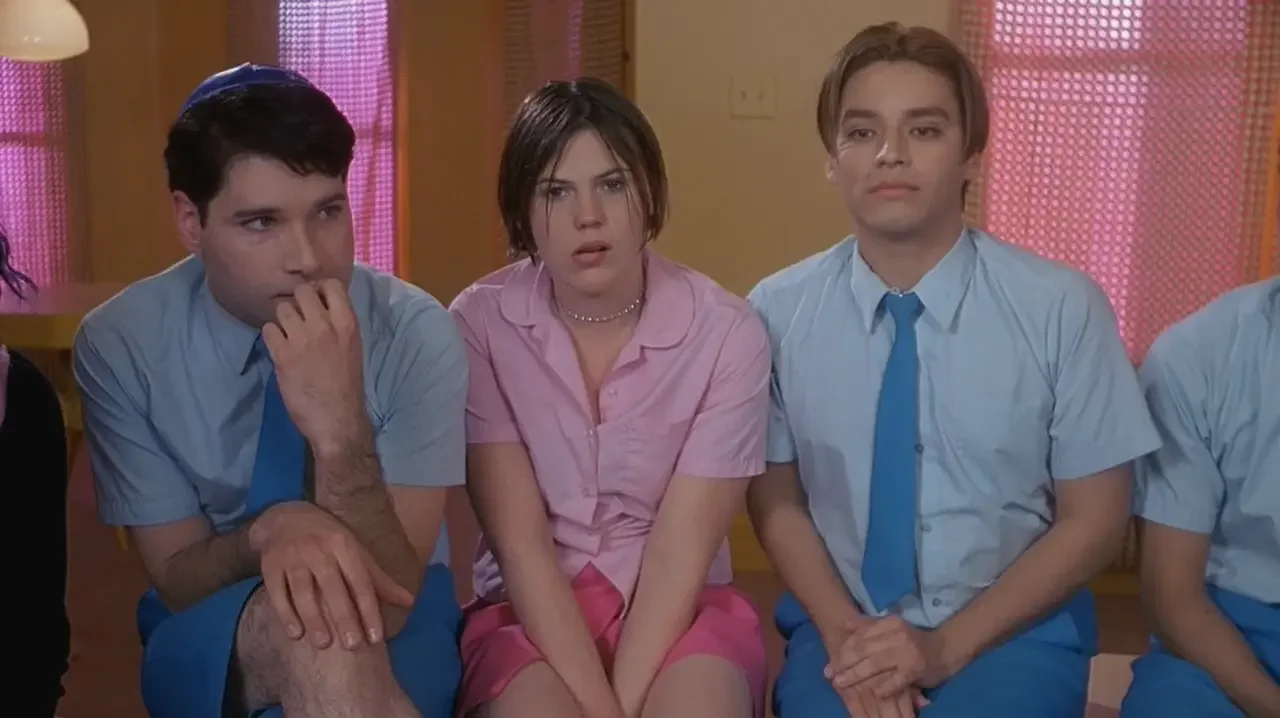
It’s easy to imagine a world in which Clea Duvall was always famous, but if we want to really lay down some history we really have director Jamie Babbit to thank for introducing us to her, in all her glory. Acclaimed, thanks to her seminal cult classic 1999 But I’m a Cheerleader, which Clea D would famously star alongside Natasha Lyonne, Babbit’s early championing of Duvall had begun the same year.
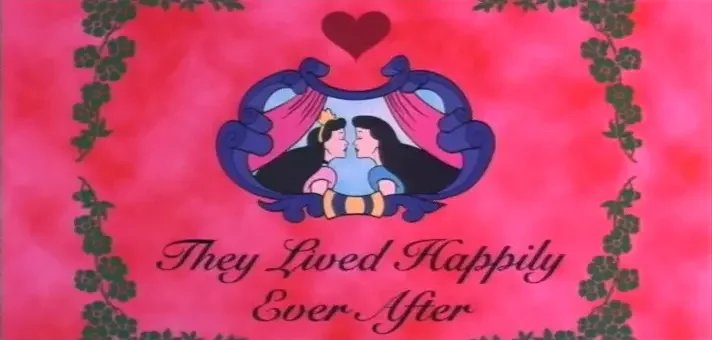
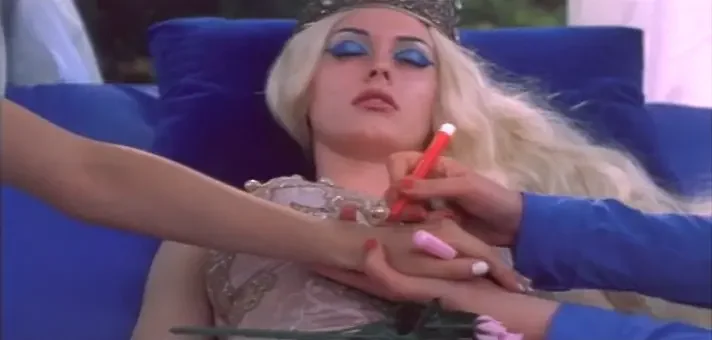
One of Babbitt's early works, Sleeping Beauties, is a short film revolving around a mortician, Heather, who, while pining for her unattainable former flame, meets and falls for a photographer’s assistant, Clea. This assistant, named for, and played by, Clea Duvall is in no small way the first major image of Duvall proper.
In a role written so specifically for her, she immediately is captivating, and so specifically archetypical. Wistfully looking across the headstones of the cemetery where our characters find themselves, Duvall's gaze pierces across the screen. She has a face possessed of such seriousness, of inner consideration and feeling. It is in this way she really does embody, or even partially set, every 90s sapphic stereotype - of longing, serious contemplation, deeply held feeling, a sharp jawline, and a certain haircut with a strand of hair flopping just-so.
Babbit’s camera loves to linger on her face - on the way Duvall’s entire expression, from her eyes, to her mouth set tightly, can express so much. An oft-quoted golden rule of cinema is ‘show don’t tell’, and Babbit clearly saw the ability in Duvall’s face to embody that rule - no extraneous dialogue required.
This sense of projected feeling, of externalised inner-depth of the character visible just through her face, is similarly used in Babbit’s But I’m A Cheerleader. In this film we follow Megan, who was sent to a conversion camp to cure her lesbianism, but instead discovers her gay true self. In the envelope of characters she meets along the way, we have, most prominently, Graham, played by Duvall, who is (more) openly gay and develops a relationship with Megan.
Duvall’s is giving the full gamut of emotional expression to play with. Graham (does a femme name get any gayer?) is a wonderfully rebellious anti-authoritatian character, vocally out about her sexuality and antagonistically questioning of the entire premise of the camp. Again, often purely through Duvall’s subtle physical performance, we see Graham’s attraction to the main character develop. Across campfires, beds in dorms, or strange sport-like activities, we see the teenage crush, the swirling combination of charm, limerance, and lust merge. Later on in the film Graham is deeply depressed, and Duvall’s downcast 90’s nihilism is utterly pitch-perfect.
She’s charismatic on both ends of the emotional range, whether sadness or joy. A superb actress, and one well suited for the screen specifically - her delicacy of performance would be too subtle for the stage - her keening eyes and tilt of head sitting so slightly carries with it an expressiveness that requires the magnifying lens of the camera.
It is not just that she performs well. Duvall’s image, in all that she is, also has become emblematic. It is as we have written it earlier in this piece - the visual characteristics of her era, her style, of her have become symbolic of a certain kind of lesbianism, of a certain archetype. Or maybe stereotype, if you boil it down. If monotone was in the business of making charts or visual graphs we could insert one here to really point out all the visual markers.
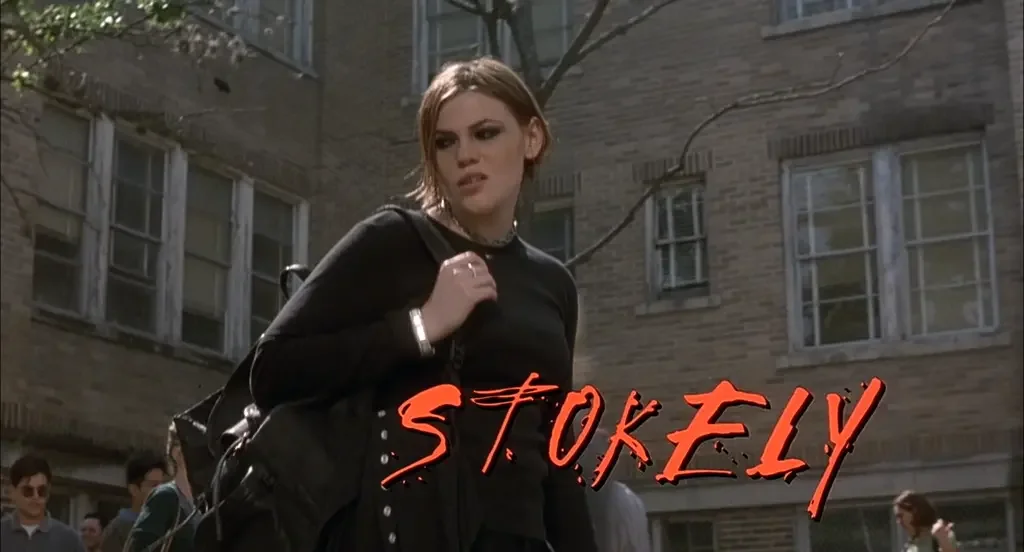
Even in a slightly smaller, slightly earlier, role, as Stokely Mitchell in 1998’s The Faculty, Duvall is the quintessential goth ‘queer-do’ highschool outcast. The Faculty is a pitch-perfect 90s teen comedy, full of its own specific pleasures (goopy space monsters, choice altrock hits, Salma Hayek, Usher, and Jon Stewart), not least of all Duvall’s wryly apathetic sneer. The callous jibes thrown at Stokely (“violent lesbian” stands out) are returned with dripping “fuck-you” disdain by Duvall, with sullen glare. Later, when they rely on Stokely’s sci-fi knowledge to save each other, the other characters shamefacedly apologise. Tragically, by the end of the film, Stokely has renounced her all-black sartorial choices and has begun dating a boy (gasp!). We, the viewer, know the truth.
So! Then we ask: what does it mean to be emblematic? What does it mean to embody, to carry a certain image of a person in the popular sphere? There simply aren’t that many famous lesbian actresses, let alone characters, and frankly Duvall is arguably one of the most artistically prominent. There are few other sapphic figures of this iconic status, and tragically some of them kind of suck..
While she was consistently cast to type - her performances, and the roles she played are specific to a certain kind of iconography, perhaps Duvall is able to subvert this trapping of embodiment by writing it in her own terms, both through a set of performances, and then also her own written and directed works. In a sense, that’s really just the role of art generally. To express, something, somehow. Through her performance’s Duvall taps into a larger idea, a greater performance that blurs together her roles. In 2016, when being interviewed about her own film, The Intervention, Duvall said "I really identify with the feeling of being 'other.' And those are the characters that I'm really drawn towards, because I just think they're more complicated and they're more interesting."
What does it mean to be iconic for a certain kind of sexuality but then have to write it in your own terms? In Duvall’s exemplary case, it looks like making films that playfully acknowledge the history of your career and referentially toy with it. She’s speaking to her community - lesbos, queers, “others”. This playfulness, a charming reflexivity used to teasingly poke at the stereotypes that follow her, makes its way into later roles. Her turn as Marjorie Palmiotti on the television programme Veep is a prime example here, she is a comically taciturn security guard who, in a series of more and more absurd scenarios, ends up dating the daughter of the Vice President. With the character’s intense self-seriousness and her strangely formal apologies, Duvall takes the sapphic intensity of her career and propels it into self-effacing parody.
Duvall’s two directorial efforts, first with The Intervention in 2016, and then Happiest Season in 2020, are equally reflexive in their own rights, though in converse fashions. The Invention, is a sort of inverted The Big Chill - it follows couples on holiday, having spats while brushing up against their equally argumentative coupled friends. Duvall, directing and starring in the film, paints a domestic comedy-of-errors on screen. We see a lesbian relationship on exactly equal footing as a straight one - screentime, billing, and complication. Duvall’s sly positioning of the couples against one another, without it resorting to a battle of the sexes binary, means we get a delightfully specifically sapphic set of foibles, and some good ol’ fashion queer normalisation.
Happiest Season - well, to anyone that’s seen it, or even glimpsed at the cast list, knows it is the ultimate lesbian experience. A christmastime homecoming film, where Kristian Stewart brings home her new girlfriend to family homestead, Happiest Season really brims with sapphic glee. It is as though Duvall decreed crappy hallmark movies are not just for the straights. We, queer people, can still have a shitty romcom - just with lesbians. Moreover, thanks to Duvall, now we GET shitty romcoms directed by and starring lesbians!
So we’ve heaped praise, we’ve fangirled properly. She’s the GenX generational fixture of a certain American cinema stereotype - THE sapphic figure, THE high school alt-lesbian. What else is there to say about Clea Helen D'Etienne Duvall, except
“You are who you are. The only trick is not getting caught!”