SOUND OF METAL
addiction and its forms

The Sound of Metal explores the internal struggle of learning to live with changes to your body, your abilities, and how you interact with the world. From the outset, the film asks what happens when one’s sense of identity and control is disrupted, and how deafness becomes both a compelling narrative and a test of self-perception. Darius Marder’s directorial debut uses this transformation to explore addiction, acceptance, and the need to surrender to stillness. His creative choices, from the restrained sound design to the muted visuals, reflect Ruben’s gradual shift from resistance to understanding.
The film centres on Ruben (Riz Ahmed), a heavy metal drummer, recovering addict, and bandmate to his girlfriend Lou (Olivia Cooke). From the film’s opening, the audience gains a quick introduction to who Ruben is. Someone who needs to take care of himself, or at least stay grounded through “healthy” habits. The drastic turning point comes when he suddenly experiences a steep decline in his hearing.
The story follows the universal struggle of coming to terms with a body that no longer functions as it once did, particularly profound for someone whose life and livelihood are built around sound. Fearing for his wellbeing, Lou helps him find a place in a rural community for deaf recovering addicts.
Ruben’s journey can be read as a metaphor for addiction in all its forms. His struggle is not limited to drugs; it’s also an addiction to control, to sound, to movement, to the illusion of stability. The moment his hearing disappears, he grasps for a solution, any solution, without pausing to process what’s happening. His eagerness to undergo cochlear implant surgery reflects that same instinct for the “quick fix,” a desperate reach for the familiar high of order and normalcy. The film quietly suggests that true recovery, whether from addiction or loss, comes only when one surrenders the need to fix everything and learns to simply be.
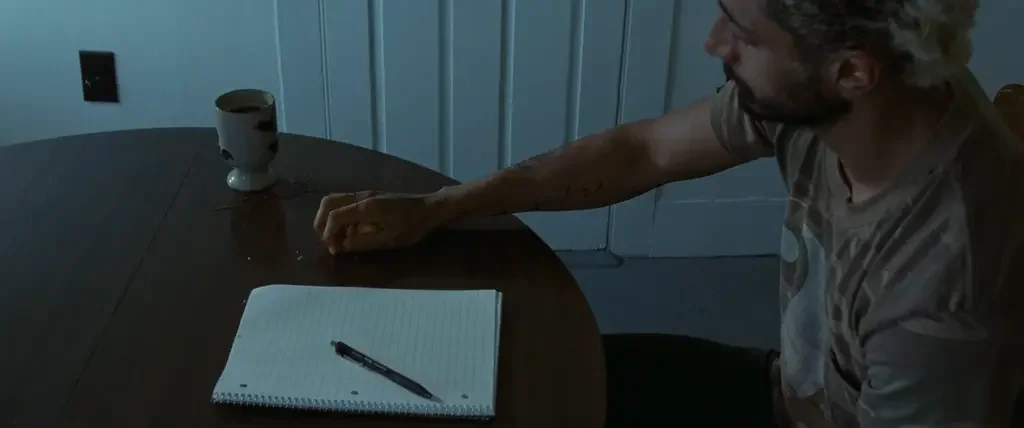
Sound of Metal marks the feature debut of director Darius Marder, who also received his first Oscar nomination for Best Original Screenplay. Visually, the film mirrors Ruben’s internal transformation through restraint. Its muted colour palette, natural lighting, and deliberate pacing strip away excess, allowing stillness to become its own form of expression. Marder’s minimalist approach keeps the focus on human faces, gestures, and silences, amplifying the emotional weight of small moments. Editing is sparse, almost meditative, giving the film a contemplative rhythm that reflects the process of acceptance. Just as Ruben must learn to live without noise, the film itself learns to breathe without cinematic clutter.
One of the film’s most striking achievements lies in its sound design. Rather than simply portraying deafness, it immerses the audience within Ruben’s auditory experience, the muffled distortions, mechanical vibrations, and pockets of silence that follow the loss of hearing. Sound becomes subjective, a narrative tool that mirrors Ruben’s confusion and denial. The transitions between clarity and chaos evoke empathy not through dialogue, but through the unsettling manipulation of what the audience can hear. In doing so, The Sound of Metal turns its very title into a sensory experience, metal not only as music, but as the harsh, metallic echo of Ruben’s altered perception.
The film is also praised for its authenticity in portraying deaf culture, not as a disability, but as a distinct community with its own identity and language. Sign language is used throughout without immediate translation, immersing the audience in Ruben’s disorientation and reflecting the alienation many deaf individuals face in a hearing world. As Ruben learns more, the audience gradually gains more captions and context, mirroring his growing understanding of American Sign Language (ASL) and the community around him. At the same time, the film’s focus on deafness as a metaphor for change and acceptance can make it vulnerable to a simplified reading, where deafness is seen primarily as symbolic rather than lived. Yet Marder’s sincerity and the involvement of deaf actors ground the film in authenticity.
Many supporting cast members are non-hearing, including Chelsea Lee, Shaheem Sanchez, and Jeremy Lee Stone, all making their feature film debuts. Lee, who like her character is deaf and queer, worked closely with Riz Ahmed to help him improve his ASL on set.
It is also a breakthrough role for Riz Ahmed, who triumphs in navigating the emotional highs and lows of Ruben’s journey. The audience grows to understand him, to sympathise, to feel frustrated, and ultimately to walk beside him through the stages of grief.
Paul Raci delivers a deeply grounded performance as Joe, the leader and mentor of the deaf recovery home. Though not deaf himself, Raci is a CODA (Child of Deaf Adults) and a long-time advocate within the deaf community. His authenticity and empathy radiate throughout the film, earning him an Oscar nomination for Best Supporting Actor.
While Olivia Cooke gives a strong performance, Lou’s character could have been explored more deeply. It’s unclear whether the audience is meant to infer that her life with Ruben was unhealthy or mutually dependent. The film never quite interrogates Ruben’s hearing lifestyle, which leaves parts of their relationship feeling underdeveloped. We understand that Lou may have her own struggle with self-harm, stemming from earlier life, but this element is only touched at a surface. With a little more focus, this thread could have added a richer complexity to the overall story.
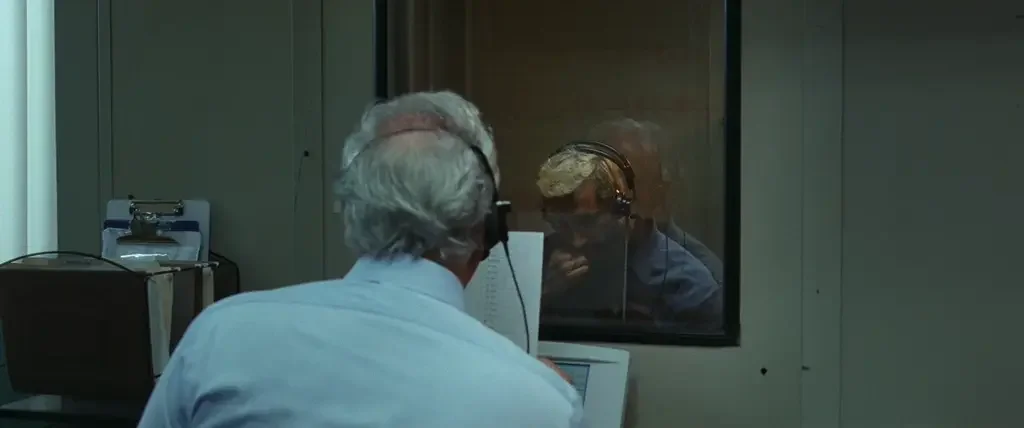
Some within the deaf community have raised concerns about the film’s portrayal of cochlear implants, suggesting it oversimplifies the complexity of that decision and downplays the challenges of the procedure. While this critique is valid, it may also serve a narrative purpose, Ruben’s choice to undergo the surgery reflects his impulsive, addict-like need for a quick fix, rather than true acceptance. The film’s portrayal of his disillusionment with the implant’s imperfect “hearing” underscores the theme of seeking control in a world that demands surrender.
At its core, The Sound of Metal reflects on acceptance, stillness, and rediscovery, the act of sitting with oneself and learning to perceive the world anew. It explores how identity and involvement in the world can shift when one is forced to listen differently, to themselves and to others. The film ultimately reminds us that understanding the sound of the world, and of ourselves, can take many forms. The central question lingers long after the credits roll: can Ruben find peace within physical silence?