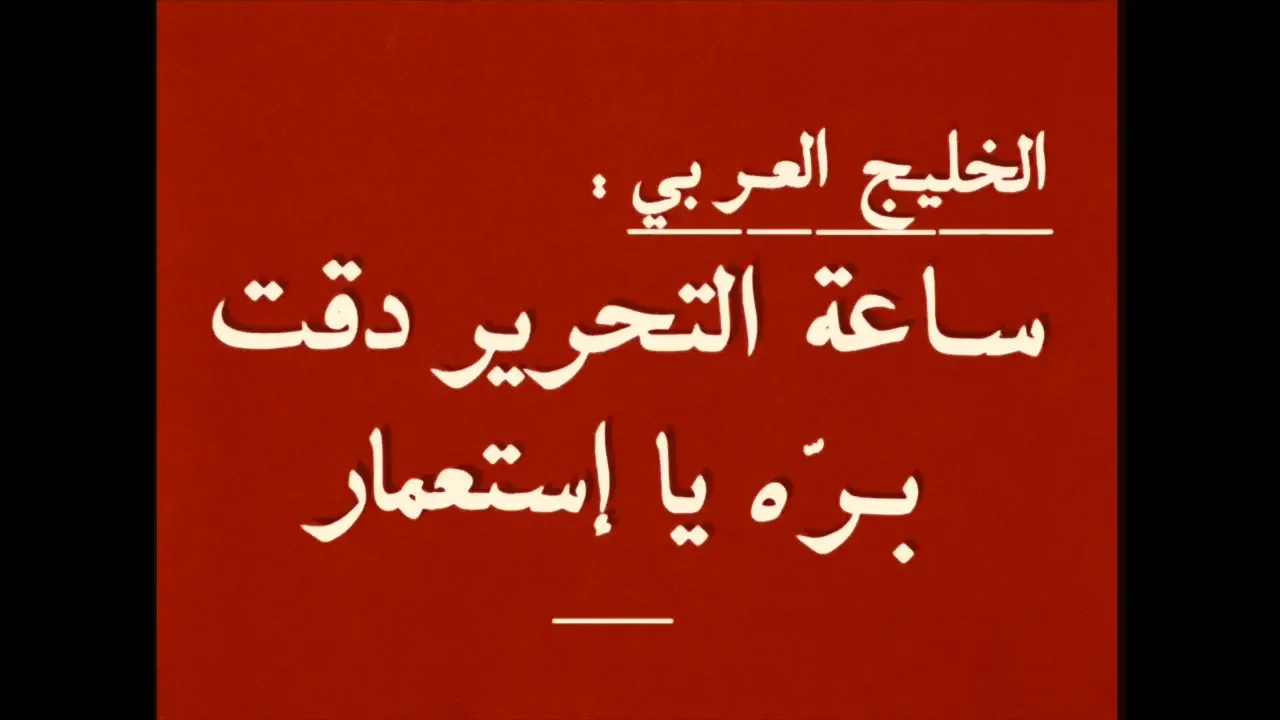
Watching The Hour of Liberation Has Arrived is to witness a foundational text, not only of Arab cinema, but of Arab feminist praxis. Lebanese film director Heiny Srour’s 1974 film remains, decades on, a radical proposition, One that she brought to the stage at just 29 years old as a PhD student of French Marxist historian and sociologist, Maxime Rodinson. It is a documentary, yes, but also a manifesto: cinematic, ideological, and methodologically bold. It dares to place the liberation of women not as a footnote to revolution but at its beating heart.
Srour, a trailblazer in severalmany ways, was the first Arab woman to have a film selected at Cannes. But The Hour of Liberation is not just a Lebanese “debut” on a Western stage. It is a refutation of that very stage, a pointed rejection of the male gaze of colonial cinema and of the depoliticised aesthetics demanded by capitalist spectacle. What Srour brings us is no polished appeal to Western liberal sympathies; instead, she offers a working, breathing guide to revolutionary struggle. The film does not ask for empathy - It insists on action.
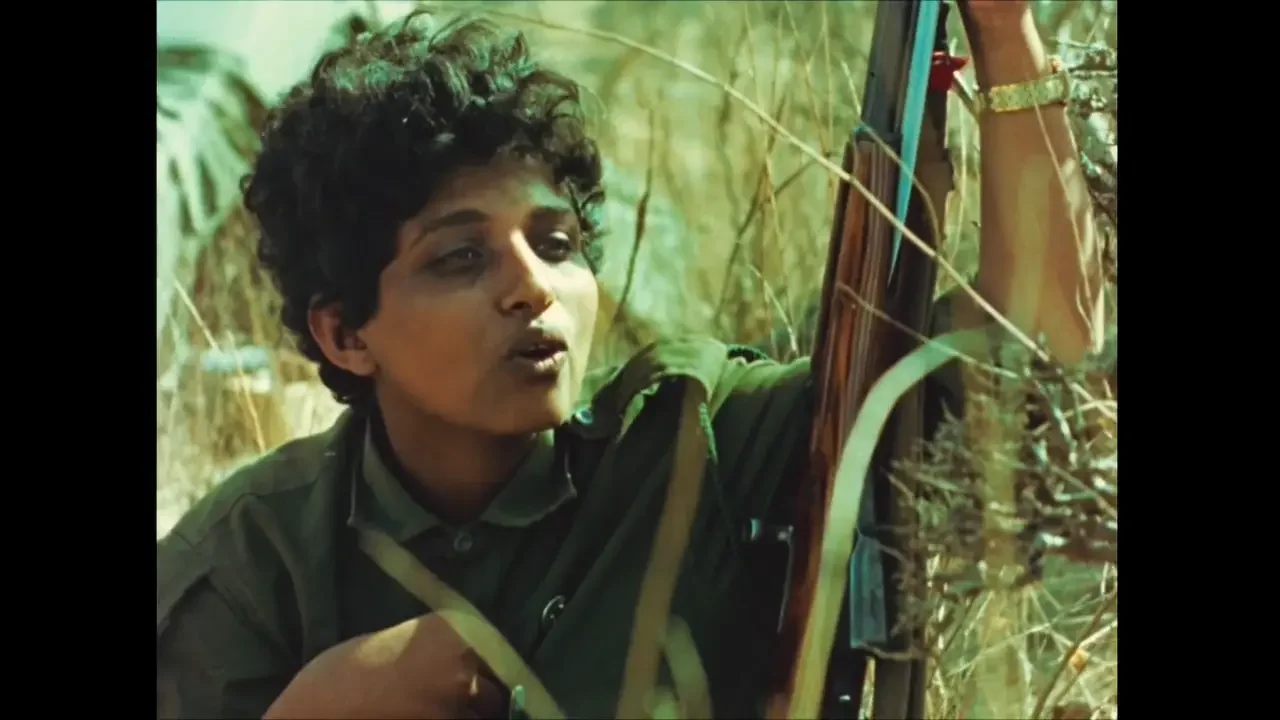
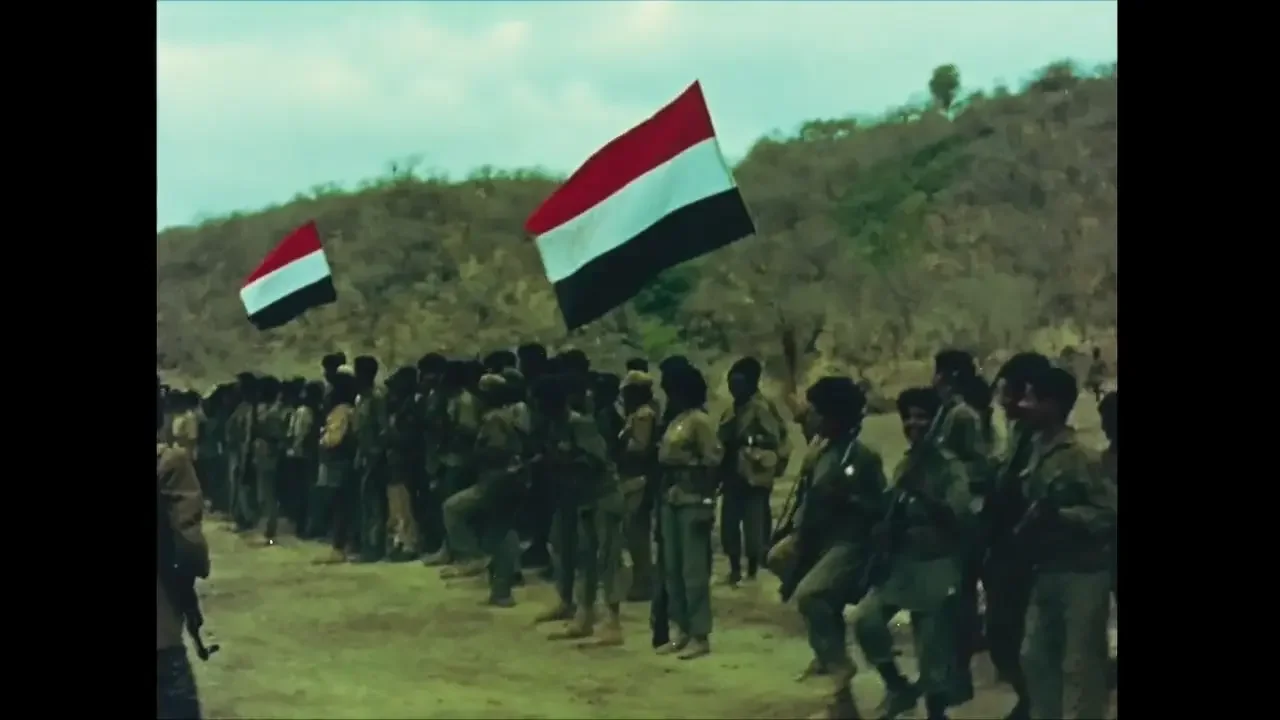
Set in the Dhofar region of Oman, Srour follows and documents the Popular Front for the Liberation of Oman and the Arabian Gulf (PFLOAG), capturing a moment in which the global anti-imperialist Marxist struggle intertwined with a truly feminist praxis. Srour herself described it as the first time in the Arab world that women’s liberation was taken as an end in itself, not simply as a tool in the fight against colonialism. Proven right well beyond her assessment of the politics of the 1970’s, it’s easy to see the legacy of how often feminist arab liberation has been instrumentalised, weaponised, postponed, or erased entirely in the name of “bigger” nationalist projects.
The film is, as Srour herself notes, partisan. It is not pretending neutrality. But it's partisanship is not propaganda, it is rooted in ethnographic detail, in oral testimony, in direct observation. Srour’s training in anthropology and sociology is evident. Her camera does not exoticise; it contextualises. The opening scenes, the liberation song sung by the people’s army, are not aesthetic choices but epistemological ones. We are introduced to the revolution not through guns or speeches, but through song. The viewer is grounded in the communal humanity of a movement that is so often reduced to violent abstraction.
This fight for liberation is not simply portrayed as a spectacle to be delighted in by audiences of the West. While this work is a study of culture, it actively fights against the core of its form. Historically, predominant Western framings of ethnographic research vastly reduce the importance and power of any culture outside of that regulated norm. This film does not necessarily idealise the East either. Instead, it interrogates the assumptions that shape both Western and local perceptions of struggle, using formal strategies that mirror its political ones. Its radical stance is not confined to subject matter; it extends to how the story is told - visually, structurally, and rhythmically.
Formally, the film is cleaved in two: the black-and-white sequences representing the imperialist, authoritarian past; the red-tinged or full-colour sections embracing the vibrancy of revolutionary life. This is not just a stylistic decision but an ideological one. She uses the visual grammar of cinema to delineate sides, imperialism vs. revolution, while also acknowledging, through interviews and the filmmaker’s own voice, the imperfections and compromises even within liberation movements.The styling itself goes against what is expected for this form. It was not produced to be clean and polished, it actively went against the linear nature of popular documentary form and the modernisation of entertainment. The audience is forced to stay actively engaged in the layers of the narrative as they continually unfold.
Importantly, Srour does not let the Marxist men off the hook. While she was a one woman show in the writing, directing, producing and editing of the film, she recounts, in interviews, how her cameraman and sound engineer failed to grasp, and in fact actively resisted, the feminist angle of the story. Their misogyny seeped into the production, and yet Srour persisted, resisting not just the political and military forces of the empire but the patriarchal structures within her own revolutionary circle. This too is a lesson: revolutions that marginalise women are incomplete by definition.
What does this film mean today, in the long shadow of history? Was it successful?
In the literal, political sense, the PFLO’s revolution was ultimately crushed. But Srour’s film endures, precisely because it offers something rarer than a neat historical narrative — it offers a framework for thinking differently. In an era where, as Palestinian poet and activist Mohammed El-Kurd notes, the Western gaze demands that Arab resistance take on the palatable form of victimhood, Srour’s film refuses that “politics of appeal.” The Hour of Liberation is not a cry for help. It is a call to arms.
The film’s audacity, a young Arab woman at Cannes, defending her university thesis with a camera pointed directly at revolution, is its own kind of liberation. It is a debut that announces itself with clarity and ferocity. Srour doesn’t enter the canon quietly; she tears the door off its hinges.The film itself, as an object, is a deliberate and powerfully political statement. It is not simply a documentary, nor an ethnography. It is a guiding "exemplary" text in the International, non-western Marxist struggle.
For those of us still pushing against layered forms of control like local patriarchy, imperial geopolitics, cultural erasure, The Hour of Liberation Has Arrived is not just a historical document. It is a compass. It is proof of premise. It is, ultimately, a guide. All in 62 minutes.