The Count of Monte Cristo, co-directed by Alexandre de La Patellière and Matthieu Delaporte, is a film pleasurably grand, whisking us faithfully across the feted narrative of the original Dumas novel with a pacing and formal sensibility explicitly geared to the contemporary.
Hewing closely to the novel with only minor changes, the film charts the path of young Edmond, who, having just achieved a promotion to captain through great moral determination, joyfully returns home to tell news of his new fortune. Edmond is delighted that he now, with proper career prospects, will be able to marry his paramour Mercédès.
It would seem that a bucolic, if sea-faring, future lies before him. Darsedtly Fernand, son of the wealthy family that Edmond and his father work for, is stricken with jealousy and conspires with a disgruntled ex-capitan to have Edmond arrested for treason on suspicion of being an agent of Napoleon.
Edmond is locked away in a dank oubliette for several years, eventually escaping with the help of a fellow prisoner, who, with his dying breath, reveals the location of a treasure trove on the island of Monte Cristo. Edmond, using this bounty, re-fashions himself with the titular mantle as The Count of Monte Cristo. After another series of passing years Edmond, as the Count, acquires some equally aggrieved accomplices and sets out to enact revenge on his betrayers.
Neatly encapsulated by the directors in one interview as “baroque”, COMC is a film that revels in the grandeur of its self-driven francophilia. The directors, having previously written another screen adaptation of The Three Musketeers, are clearly enamoured with the lusty epics of the 19th century and all the epic melodrama that come with it.
However, despite their back to back interest in the novels by Alexander Dumas, they’re clearly uninterested in a pedantic historicity. COMC, once done with establishing of characters, origin stories, and of motivations, reveals itself as a quasi-heist film, and immediately a rollicking good time. And who doesn’t love a carefully crafted scheme? The film becomes a caper, at times so reminiscent of Nolan’s or Soderberg’s slick oeuvre that the comparison is too obvious; replete with swirling camera work, an orchestra soundtrack that builds tension, and simultaneous plot exposition and onscreen action, the film furiously cuts back and forth between our characters planning and carrying out their scheme.
It’s not that the directors have re-written or re-tooled the central story to bring it into line with this genre. It’s more that the formal staging and propulsive movement of the movie makes it feel directly downstream of American action cinema - a cinema that boils down the long legacy of action adventure and caper films into enormous epics. This American action adventure epic is perhaps best exemplified by the Pirates of the Caribbean series, with the shared nautical connection an easy touch, though the original COMC novel definitely beat them to the punch.
These films become rollercoasters (literally, if you look at the initial pitch for Pirates, which was a synergistic tie-in from a Disney Theme Park Ride); high drama fused with a speedy plot that never allows for moments of soft contemplation - there’s always a new sword fight around the corner, or a new mask to don in blistering montage. Considering the difference between the grotesquely swollen budgets of its American counterparts, COMC manages to mostly match, achieving a lush and expansive visual feast. This is only occasionally undercut with an overreliance on floaty drone shots, awkwardly zooming across grassy fields and up to the characters face, as though we’re suddenly dropped into a tourism video for a Marseille trip.
In another interview the directors discuss the protagonist Edmond as being a bit like “Batman’s ancestor, but a Batman motivated by love”. A more French reclamation of an American hero I cannot imagine. I think this is telling - Edmond as superhero, as a quasi-mythic figure who, through an exciting origin story, becomes a quasi-mythic figure. It’s not like the book doesn't lend itself to this framework, it’s more just that the film becomes less rich because of it.
Don’t mistake me, the film manages to enjoyably grip for the entirety of it’s near 3 hour runtime, but because of the pace of the film, because of its driving plot full of riotous double-turns and drama, it's unable to unpack almost any of the fertile/juicy thematic notions inherent in the original story.
The film visually and narrative presents an enormous bevy of ideas, such that you could make a good drinking game in tallying the themes it didn’t meaningfully engage with (social class, grief, betrayal, patriotism, capitalism, war, industrial revolution, etc.) The film doesn’t really attempt to interrogate the inherent motivations of the characters either. It’s not a rumination on anything. It gestures toward the grief and trauma of wearing the mask (literally), but this really does feel like a rehash of Batman. Or, in a more gracious comparison, of Phantom of the Opera. Maybe we’ve all seen too many men wearing masks and pulling off extra-judicial justice at this point in the 21st century, but it left very little resonance post-screening.
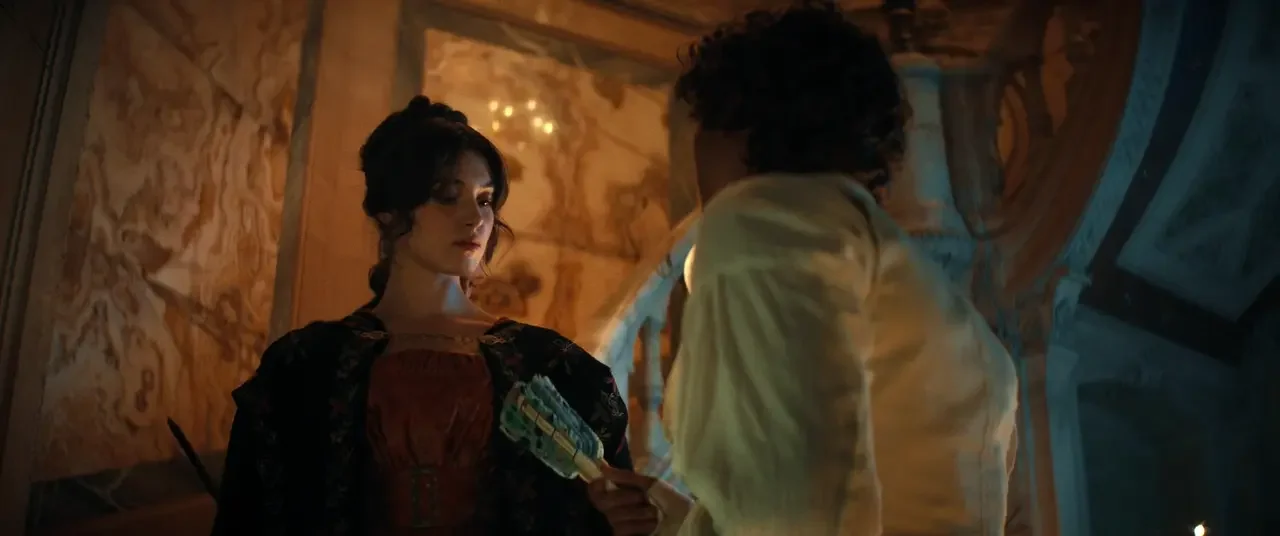
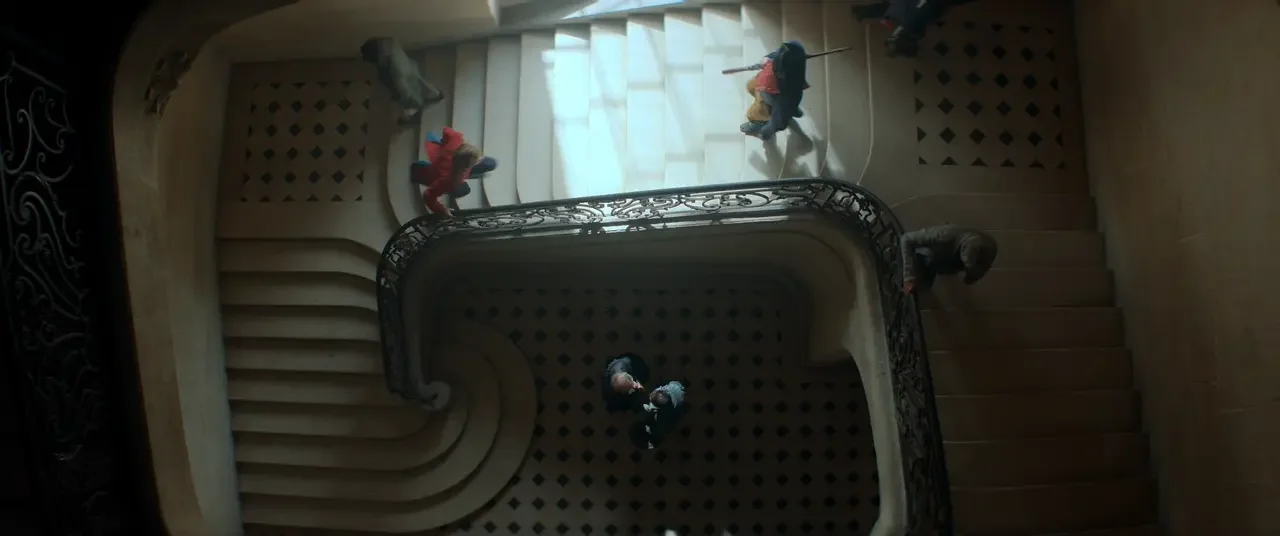
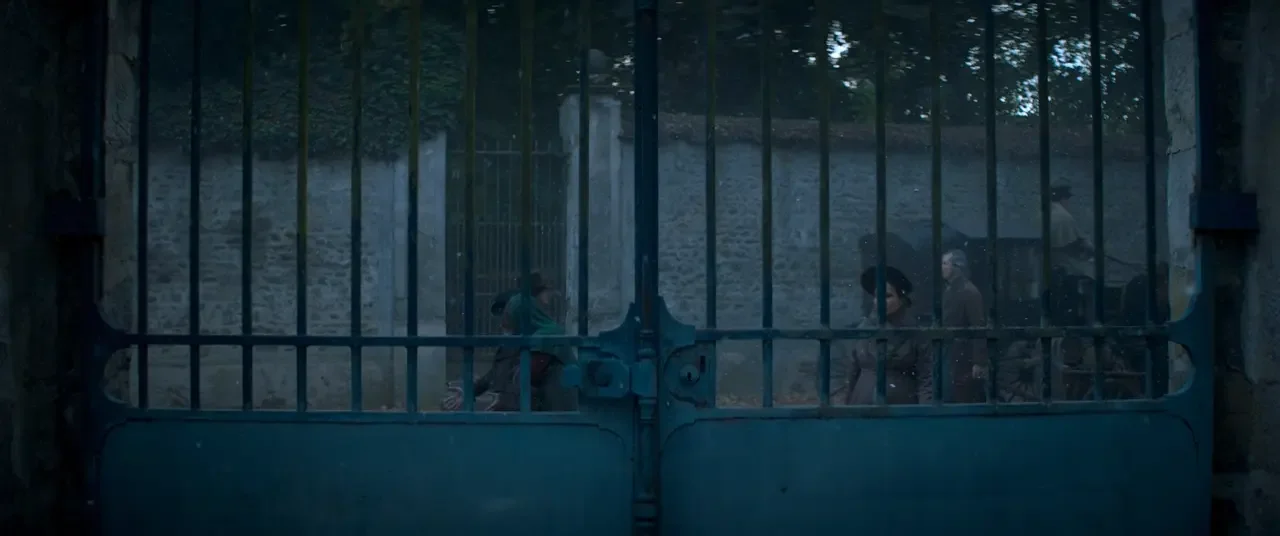
With its adherence to the novel’s story this was essentially inevitable - they’re there in the text, inescapable in the story, but the film is simply moving too fast to bother with extrapolation. I’ll happily admit it’s extremely easy to enjoy the film purely because of how absurdly French is all is, of how much the original book is inherently so French - the courtrooms, the palaces, the whispered proclamations of love, the fencing, the outfits. Literally any frame from this movie would immediately reveal its origin. Even looking at the two be-spectacled directors gives me such distinct pleasure at the French-iness of it all! I think this reveling in the comically overwrought really helps carry the film forward.
At just shy of three hours the film manages to avoid inertia, but does slide immediately off your brain as soon as the final swordfight ends. French with a capital F, and positively epic in scope and mostly in form, The Count of Monte Cristo is a hearty swashbuckling voyage but you won’t really remember the destination or the journey.