Australian imagery, Australian cinema, Australian art as a category is rife with complications, with concessions. Indigenous artists have long been interrogating, critiquing, playing with, and deconstructing these visual cultures, few as prolifically as Tracey Moffat. The quantity of Moffat’s artistic output is extraordinary, and the means of interrogation she has developed over her visual artistic practice is equally staggering; Moffat has worked in documentary, narrative fiction, photography, music videos (INXS, perhaps most famously), and plenty more besides.Less-remarked upon is her foray into (somewhat) more conventionally structured feature film.
Bedevil, released in 1993, is a formally striking, anthology triptych, featuring three distinct short films, with each thoroughly refracting Moffat’s campy auto-fictional surrealist gaze. Distinctly post-modern in its collision of cinematic references, formal experimentalism, living culture both young and ancient, the film really does exist somewhere between the gallery wall and the Cannes cinema screen.
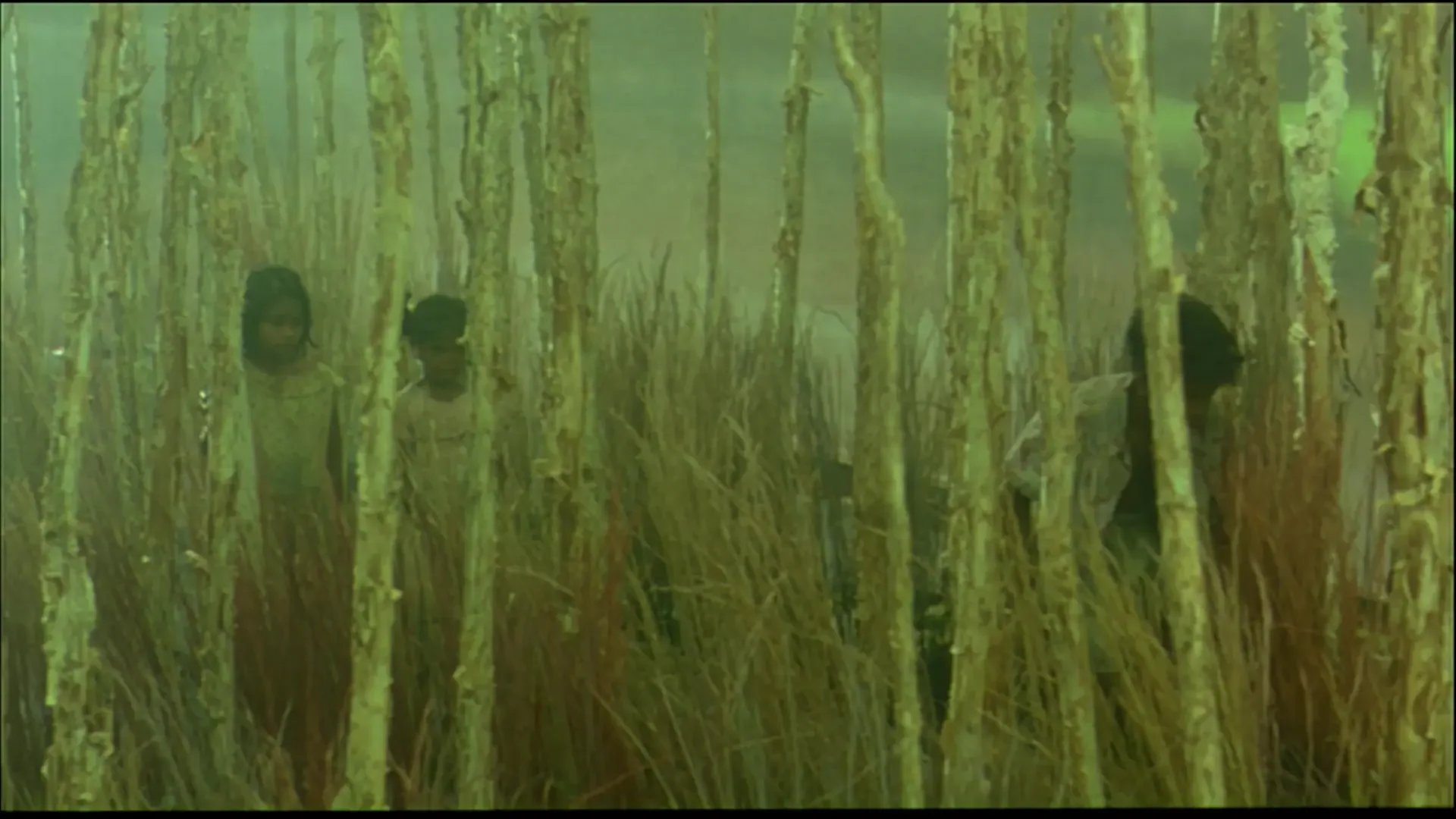
The first film, Mr Chuck, is a faux-documentary, telling the tale of a swamp haunted by the ghost of an American GI through the contrasted recollections of an indigenous man and a white woman who encountered it years prior. Enemating smoke and strange groans, the swamp is a classic ghost story, with the children creeping toward it and seeing its horrors leap up and scare. A cauldron of allusions - literally drawing in the characters and the viewers with its spooky mysteries, encasing the complicated and violent past of Australia beneath its bubbling mud. Against this, the film shifts into segments that feel like a tourism television advertisement, with sweeping aerial shots of Australian coastline, practically bucolic lapping waters across sandy ridges, and post-card perfect humdrum day-glo suburbia beachside.
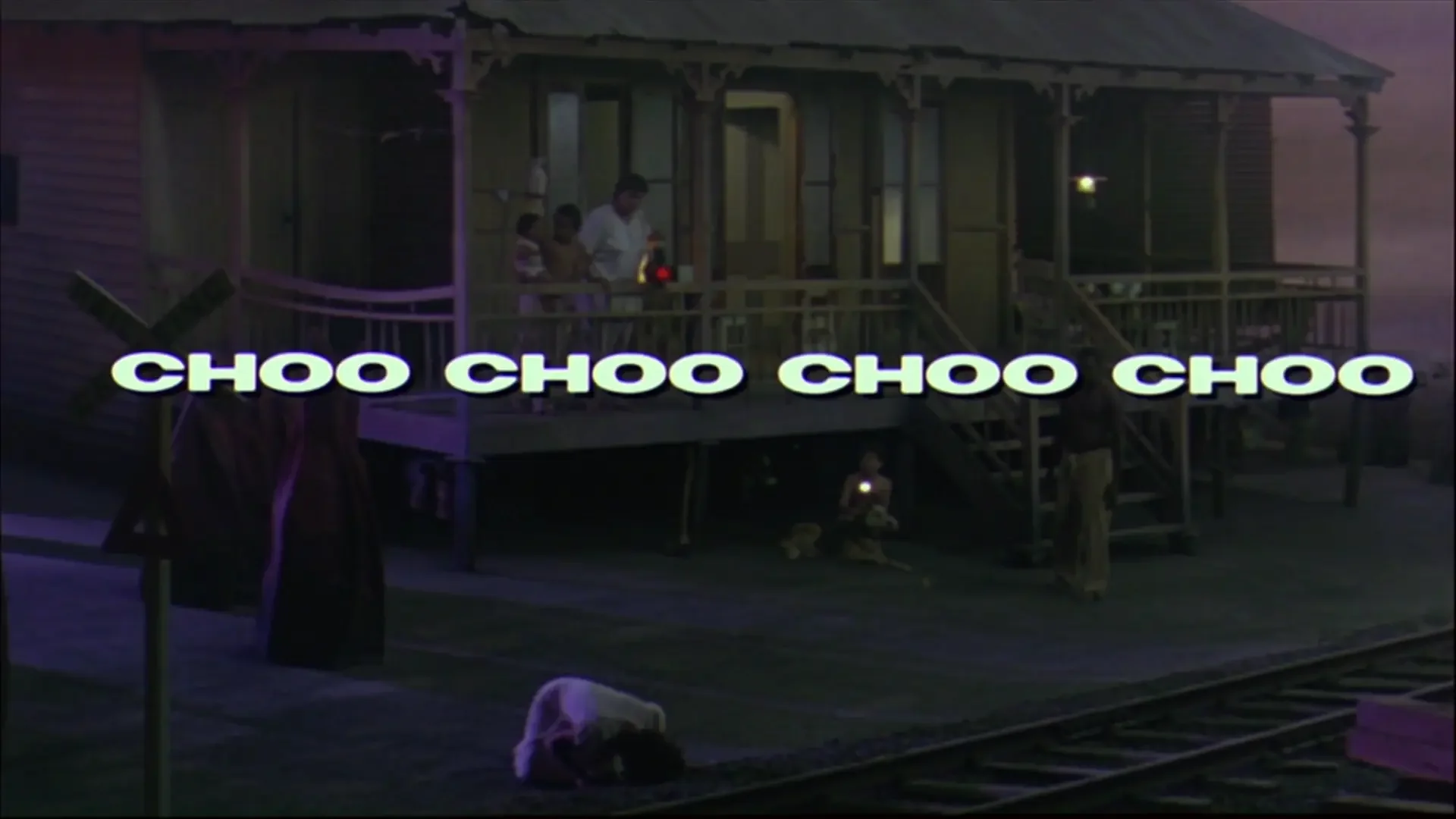
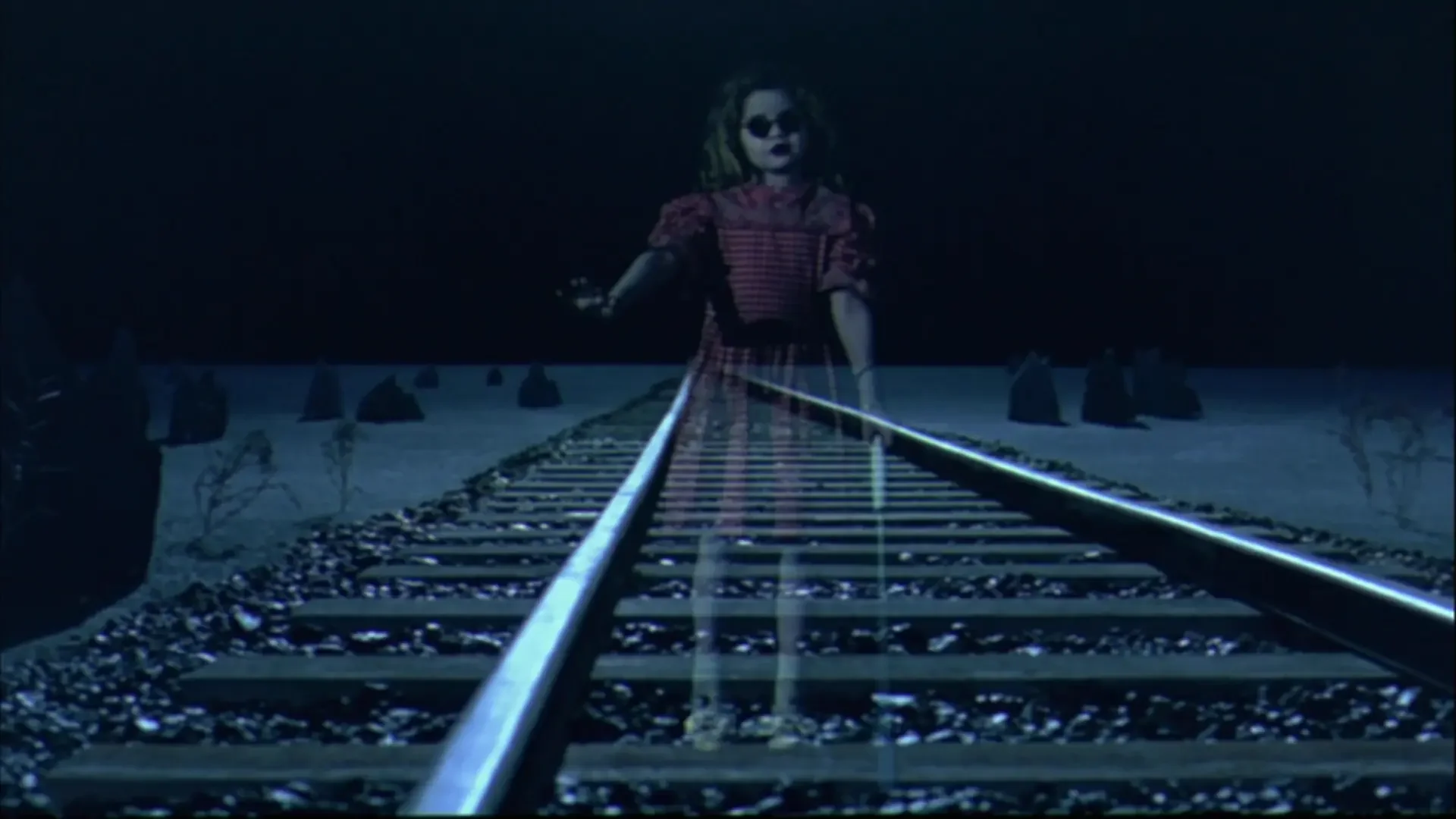
The second film, Choo Choo Choo Choo, is similar in its faux-documentary framing, but this time we are led by a man so jovial the tone becomes more like a children’s television programme. Think a Hammer Horror Sesame Street or Playschool, but if we were then told a ghost story involving effigies, haunted trainlines, moving alien stars, and blinded children. Another collision of juxtaposition here, with our 1950s gothic trainline tale cut across with a ute packed with women who drink, cook, smoke, vibe out to banjo music on a boombox, and occasionally turn to camera to wryly instruct us in the ways of cooking in the vein of a daytime cooking show, promising to make snake terrine with walnut vinaigrette with their yabby catch of the day.
The third segment, Lovin’ The Spin I’m In, is a more straightforward narrative, following a motley cast of characters who inhabit a small township. We circle the comings and goings of the rent-seeking landlord, the shopkeep, the young rollerblading boy, the lovers, and several others, as they intersect. The set here is the real standout for me, with incredible matte painting backdrops, stunning overhead shots of tiny angled streets, and incredible smoke and fog effects lit with a vermillion glow.
Even the interstitial moments between the films blend in striking fashion. The frame fills with pastel colours, and we linger on these huge flat expanses, reminiscent of Derek Jarman’s big use of colour, or a Mark Rothko painting, or simply any painting, which softly fade and blur into the next film. It is as though the sun is rising on a new day, a new ghost story.
Sound design is lush across all three films, with the whir of crickets, wind, the whispers of ghosts. The natural world reigns large, with the mechanised sounds of cars and and even people often bluntly smashed against the tapestry of this wider soundscape. The final film in particular, with a dance piece in the middle, builds sonically, the swelling strings of its hammy orchestral Hollywood score working wonderfully. Every film though is just so charmingly camp, even featuring great musical stabs at the ends to punctuate the spooky scares.
Though it’s a purely semantic fiction to divide visual media up into ‘feature films’ vs anything else, to use film industry terminology to mark something as a ‘feature’ simply depending on its length and general formal framing, it is important to do so here because it allows for a specific demarcator: Moffat’s Bedevil is one of the very few Australian Indigenous feature films directed by a woman, and notably the first shown at the Cannes film festival. It is also, neatly, her debut feature film, though unlike many debut films it doesn’t mark the start of a burgeoning nascent career, but rather one firmly situated within a larger artistic practice.
While important to note the film’s particular place in history as a milestone of important representation in the putatively prestigious halls of film festivals worldwide, Bedevil does also exist as an incredible object simply unto itself - an tripartite film, imbricated with its own unique blend of reference and style, that expands upon Moffat’s significant body of work, weaving together so many of the threads she is fascinated with.
That such a film can be both a kind of détournement, of turning the colonial film language of (Hollywood/British) cinema back on itself to reflect its gaze and be something radical, and also a joyful expression of indigenous storytelling is a testament to Moffat’s endlessly layered work. As Moffat put it in an interview in ArtGuide:
“No, not at all. I like to think my work goes beyond that—and that is why my work goes around the world. My work can be reduced to that reading that you’re talking about, that it sits as postcolonial and so on, but I like to think I’m more inventive than that. It isn’t just one line. My ideas operate in the world of art. For me it is about pushing the form. What I do when I’m making art is trying to create something that hasn’t been seen before.”
Bedevil is a film eminently watchable, delectable in its cinematic pleasures, and leaves one post-viewing with a striking set of images, thoughts, and reflections that is befitting of its providence and its intention - Moffat does make something we haven’t seen, and as a debut is all the more exciting for it.